Idea map
Everything a student learns here, and what each idea builds on. This page is a placeholder.
addition
- Changing order or grouping does not change a sum (skill)
- Count on from a number instead of counting everything (skill)
- Solve every kind of adding and subtracting story within 20 (skill)
- Subtracting is finding a missing part (skill)
- Add and subtract within 20 using strategies (skill)
- Act out putting together and taking away with things (skill)
- Add and subtract within 10 (skill)
- Split numbers up to 10 into parts, and find the partner that makes ten (skill)
counting
- Count out up to 20 things in any arrangement (skill)
- Each counting number is one more than the last (skill)
- Match one number word to each thing counted (skill)
- Tell which group or number is more, less, or the same (skill)
- The last number said tells how many there are (skill)
- Say the counting numbers in order, by ones and by tens (skill)
equality
- Find the missing number that makes both sides equal (skill)
- The equal sign means both sides are the same amount (skill)
- Adding nothing leaves a thing as it was (principle)
- A letter can stand for a thing or for how much it weighs (concept)
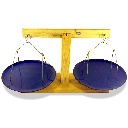
- A level scale means both sides weigh the same (concept)
- A thing is equal to itself (principle)
- Do the same to both sides and the scale stays balanced (principle)
- If one thing equals another, the second equals the first (principle)
- None of a thing weighs nothing (principle)
- One of a thing is just that thing (principle)
- Putting two things together weighs the same in either order (principle)
- Something can be swapped for anything it equals (principle)
- Two things equal to the same thing are equal to each other (principle)
fractions
- Cut a whole into equal shares: halves, thirds, fourths (skill)
- Compare fractions with the same top or the same bottom number (skill)
- Fractions as points on a number line (skill)
- One part of a whole cut into equal parts, and counting those parts (skill)
- Simple equal fractions, and whole numbers written as fractions (skill)
- Add and subtract fractions with the same denominator, including mixed numbers (skill)
- Compare decimals to hundredths (skill)
- Compare fractions with different denominators (skill)
- Multiply a fraction by a whole number (skill)
- Multiplying top and bottom by the same number keeps a fraction's value (skill)
- Tenths and hundredths as fractions and as decimals (skill)
- Add and subtract fractions with different denominators (skill)
- Multiply a fraction by a fraction (skill)
- Multiplying can make a number bigger or smaller (skill)
geometry
- Build a triangle with three equal sides using compass and straightedge (skill)
- Copy a length with a compass (skill)
- Cutting a shape up and moving the pieces keeps its area (principle)
measurement
- Length is how many units fit end to end (skill)
- Cut a rectangle into rows and columns of equal squares (skill)
- Whole numbers as distances on a number line (skill)
- A measurement says how many, and of what (concept)
- Grams are a unit for how heavy something is (concept)
multiplication
- Equal groups and arrays as repeated adding (skill)
- A rectangle's area is its rows times its columns (skill)
- A times B means A groups of B (skill)
- Dividing as sharing out or as making groups (skill)
- Dividing is finding a missing factor (skill)
- Multiply and divide within 100 quickly and surely (skill)
- Order, grouping and splitting a factor in multiplication (skill)
- Solve multiplying and dividing stories within 100 (skill)
- Multiply larger numbers place by place (skill)
- Times as many: comparing by multiplying (skill)
place-value
- A two-digit number is tens and ones (skill)
- Compare two-digit numbers by their tens and ones (skill)
- Add and subtract within 100 using tens and ones (skill)
- A three-digit number is hundreds, tens and ones (skill)
- Add and subtract within 1000, trading between places (skill)
- Each place is worth ten of the place to its right (skill)
- A teen number is a ten and some ones (skill)
som
- Get the unknown by itself on the scale and read what it weighs (skill)
- Make any amount up to 15 from weights that double: 1, 2, 4, 8 (skill)
- Multiply numbers split into parts with an area diagram (skill)
- Show and read numbers on an abacus (skill)
- Two of the same weight trade for the next weight up (carrying) (skill)
- Weigh something on a steelyard by sliding a known weight along the arm (skill)
- Write down what is on each side of the scale (skill)